The Hidden Cost of Using an EHR in Public Health: What Counties Learn Too Late
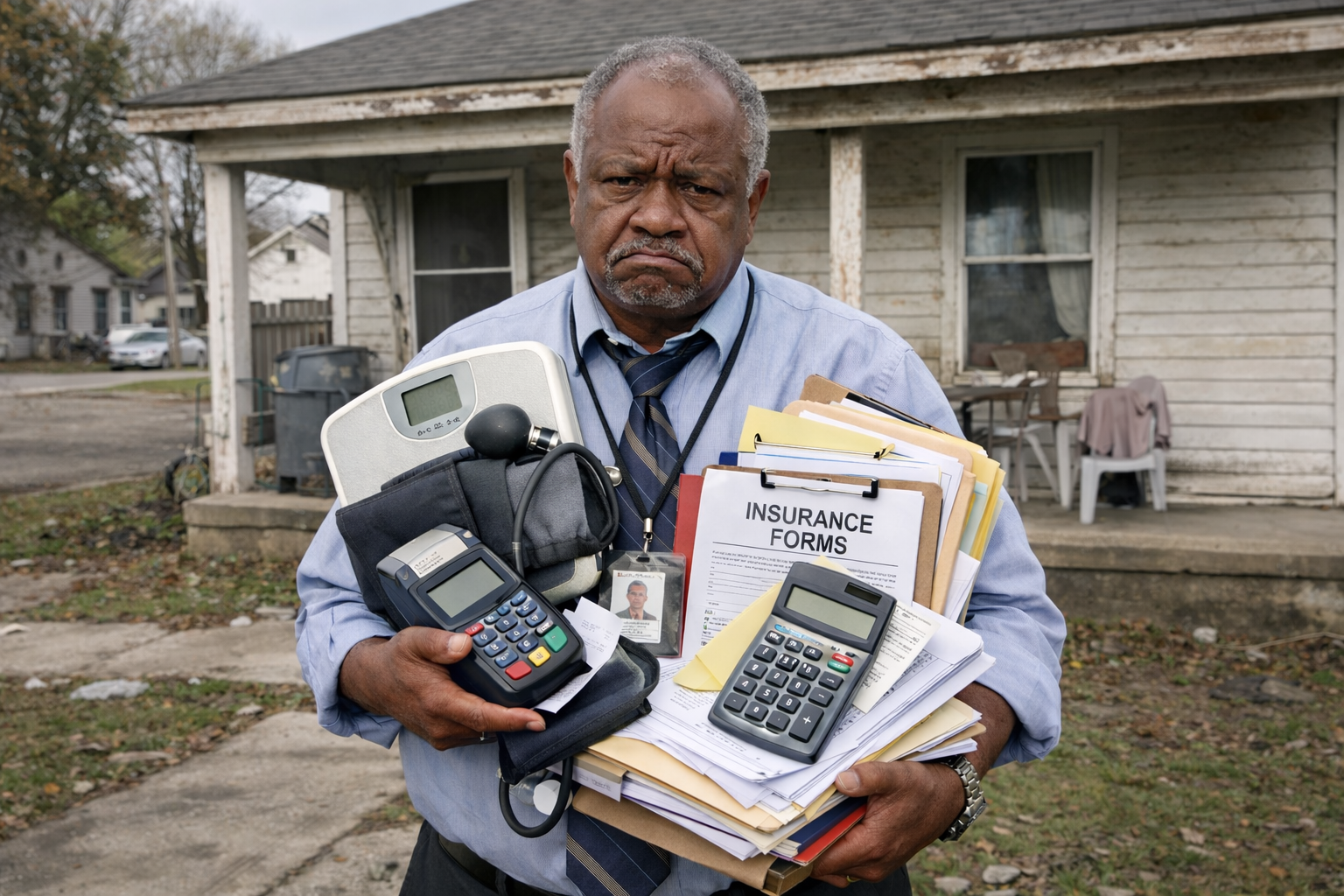
Counties across the country are being pushed toward “whole-department EHR modernization.” The pitch always sounds convincing: one system for everyone, unified records, seamless data.
But what happens next is painfully predictable.
The new EHR goes live… and public health teams quickly realize something is very wrong.
Home visitors can’t document housing concerns without clicking through diagnosis screens.
Disease investigators get stuck inside encounter workflows designed for primary-care physicians.
Social workers are forced to enter allergies, vitals, and prescribing fields they will never use.
Supervisors lose visibility because the EHR hides everything behind clinical walls.
And every day, staff say the same thing:
“This system was not built for us.”
They're right.
And the reason has nothing to do with training or change management.
The reason is structural: EHRs are constrained by federal certification requirements that make them incompatible with public health work.
The Hidden Problem: EHRs Must Follow ONC/CMS Rules — Your Programs Don’t
EHRs cannot be designed freely.
If they want to serve clinical providers, they must comply with hundreds of mandatory ONC/CMS certification rules. These rules force EHRs to include:
- Structured diagnosis workflows
- Medication prescribing and reconciliation
- Allergy tracking
- Clinical decision support
- Vitals, labs, and problem lists
- FHIR US Core profiles for hospital interoperability
- Encounter-based visit architecture
- Audit, ordering, and billing scaffolding
These aren’t optional.
These are federal requirements.
So when a county buys an EHR, it is not buying a flexible platform. It is buying a system locked into a medical encounter model—one that can only evolve within strict certification boundaries.
This is perfect for hospitals.It is disastrous for public health.
Why Counties Struggle (and Often Regret Switching)
We see this story over and over again:
A county moves from Persimmony to an EHR, believing it will create efficiency… and within a year, frontline teams are begging for help.
Why? Because EHRs introduce several structural problems that counties don’t see until it’s too late.
1. Clinical encounters replace real-world workflows
Public health workflows are longitudinal: home visits, follow-ups, outreach, field notes, community referrals, environmental risks, psychosocial needs.
EHRs force everything into a billable, clinical encounter.
This breaks workflow continuity and makes documentation harder—not easier.
2. You get hundreds of fields you don’t need
ONC certification requires EHRs to capture data that has nothing to do with public health:
- Medication orders
- Prescription history
- Allergies
- Procedure codes
- Clinical histories
- Medical problem lists
Your staff spend time clicking through irrelevant forms because the system doesn’t know the difference between a hospital and a home visit.
3. You lose the ability to track programs correctly
EHRs were built for providers, not programs.
They don’t natively understand:
- Fundable activities
- Maternal/child assessments
- Time studies
- FFP/MAC claiming
- Program-based reporting
- Multi-funded service delivery
- Case management over months or years
Counties that switch quickly discover they must rebuild their entire reporting ecosystem—usually in spreadsheets.
4. EHRs don't support team-based, field-based work
Public health requires:
- Clients served by multiple programs
- Workers from multiple departments
- Notes shared across agencies
- Referrals both in and out
- Visits that happen anywhere
- Documentation that follows the person, not the encounter
EHRs were not built for this.
They were built for one provider, one patient, one encounter.
5. You start fighting the software instead of doing the work
When an EHR forces your staff into clinical workflows they don’t need, two things happen:
- Documentation becomes slower and more frustrating
- Data quality worsens
- Supervisors lose visibility
- Programs lose efficiency
- Staff revert to paper or shadow systems
By the time leadership realizes the problem, the county has spent millions customizing a system that was never meant for public health in the first place.
Persimmony: Built for Public Health, Free from EHR Constraints
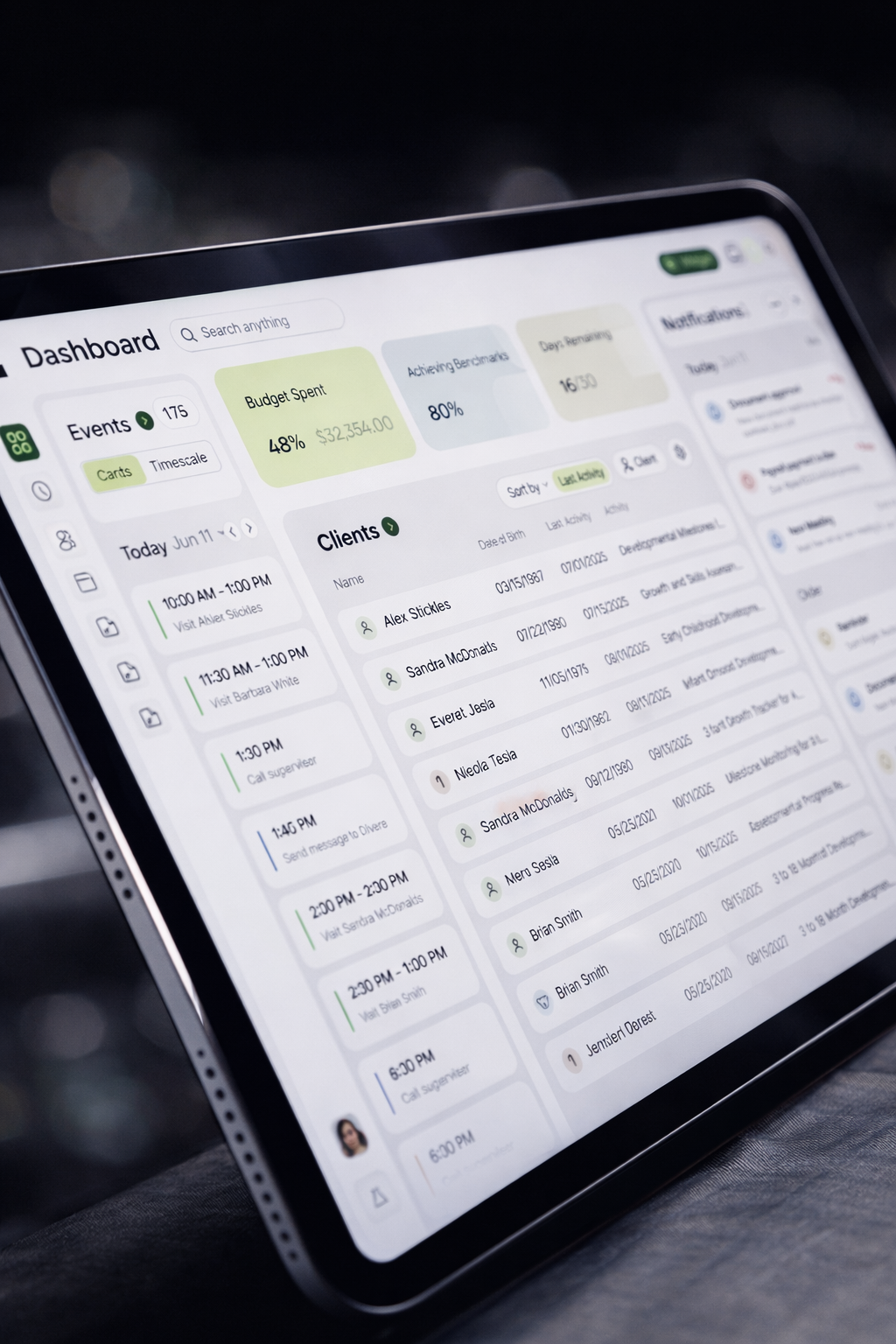
Persimmony is not an EHR—and that’s exactly why it works.
We aren’t bound by ONC certification.
We don’t need to support medication orders, vitals tracking, physician billing, or clinical encounter structures.
Instead, we build for the world you actually live in:
A world of home visits, family support, case management, disease investigation, public health nursing, housing and safety concerns, community referrals, developmental screenings, and longitudinal outcomes.
Persimmony models the work the way public health actually does it:
- Clients, not patients
- Needs and strengths, not diagnoses
- Visits and contacts, not encounters
- Domains of life, not problem lists
- Program enrollments, not clinical episodes
- Goals and interventions, not orders
- Outcomes over time, not billing codes
And because we are free from EHR certification requirements, we build workflows that fit you, not the other way around.
Interoperability Without the Burden
Here’s the key advantage:
Persimmony integrates with clinical and state systems when needed—but we don’t impose clinical requirements on your workflows.
We support FHIR, referrals, data exchange, and collaboration with medical providers.
But we never require public health staff to document like physicians.
You get connectivity without inheriting the constraints.
The Reality Counties Learn the Hard Way
Many counties who leave Persimmony for an EHR eventually come back—or ask for help unwinding the complexity that the EHR created. The pattern is so consistent it’s almost formulaic:
- County rolls out EHR to “standardize systems.”
- Public health teams lose efficiency.
- Documentation time increases dramatically.
- Supervisors can’t see program performance.
- Reporting becomes impossible without spreadsheets.
- People start asking, “Why did we switch?”
The lesson is simple:
You can’t fix public health workflows with hospital software.
You Don’t Need an EHR. You Need Persimmony.
Public health, home visiting, early childhood services, behavioral health, ECM, and community programs deserve software built for the real work—not clinical workflows imposed by federal certification.
EHRs are great for hospitals.
They are the wrong tool for counties trying to support families, communities, and prevention programs.
Persimmony is the platform that understands your mission and supports your work from the field to the board report.
If you’re tired of fighting EHR workflows that don’t fit, there’s a better way.
You don’t need an EHR.You need Persimmony.